Context and challenges
Genetic diversity is the foundation on which all biodiversity rests. FR-IDGE helps France measure it, report on it and preserve it.
Genetic diversity is the variation in genetic information carried by individuals of the same species, both within and among its populations. It is the foundation on which all biodiversity rests. It is what allows populations to adapt to changes in their environment, resist disease and survive in the long term. Without it, even a species that is abundant today may become unable to evolve and cope with a new threat, be it climate change, an emerging pathogen or the fragmentation of its habitat.
Yet intraspecific genetic diversity has long been missing from national and international conservation policies, even though the conservation status of species and ecosystems has been monitored since the 1960s, and the Convention on Biological Diversity (CBD), adopted in Rio de Janeiro in 1992, explicitly includes diversity within species.
In December 2022, the CBD’s COP15 marked a turning point: the 196 Parties adopted the Kunming-Montreal Global Biodiversity Framework. For the first time, an international agreement of this scope calls on states to monitor and preserve the genetic diversity of all species, wild and domesticated alike, and not only that of crops and livestock. Parties must now report genetic indicators in their national reports to the Convention. Two indicators, Ne500 (indicator A.4) and PM (populations maintained, indicator A.CY.22), were proposed by an international consortium of conservation geneticists.
A collaborative, international project
FR-IDGE is a collaborative project between the French Biodiversity Agency (OFB) and the French National Research Institute for Agriculture, Food and Environment (INRAE). It aims to improve the reporting of these genetic indicators to the CBD across all French territories, mainland and overseas, and to promote their use in biodiversity management in France.
FR-IDGE is rooted in international efforts. The Ne500 and PM indicators are the result of more than a decade of research by the international conservation genetics community. The Coalition for Conservation Genetics championed their inclusion in the Global Biodiversity Framework and publishes the guidelines for computing them. The European project GINAMO (Genetic Indicators for Nature Monitoring, Biodiversa+) develops best practices for implementing these indicators with stakeholders in several countries, while the COST Action GENOA (Genetic Nature Observation and Action, CA23121) is a European network for scientific cooperation that connects researchers, managers and policy makers to foster the integration of genetic diversity into biodiversity monitoring, management and conservation policies.
FR-IDGE builds on the methods developed by these partners and is committed to contributing back to European biodiversity monitoring networks.
Computing these indicators rigorously, reproducibly and at scale
This new commitment raises a practical challenge: how can these indicators be computed in a way that is rigorous, reproducible and applicable at scale?
France’s 7th national report to the CBD, submitted in February 2026, includes genetic indicators for the first time, computed for 71 species as part of an international pilot study. This first exercise showed that they can be computed, with or without DNA data. It also highlighted what is still missing: a species list that truly represents French biodiversity, reproducible workflows, and coverage of the overseas territories.
France therefore needs a sound methodology and reusable tools to prepare its next report, due in 2029. The challenge is all the greater in the overseas territories: they host exceptional biodiversity, often including many species found nowhere else, but knowledge there is more fragmented and data harder to access than in mainland France.
What FR-IDGE sets out to achieve
-
Support
Provide protected-area managers and government agencies with decision-support tools to halt the erosion of genetic diversity.
-
Train
Run workshops so that stakeholders master the calculation and use of the indicators, and can reproduce the workflows on their own.
-
Adapt to overseas territories
Develop a methodology suited to French overseas territories, with French Guiana as the pilot territory.
-
Report
Compute the genetic indicators for a list of at least 200 species representative of French biodiversity, and facilitate their submission to the CBD.
Reporting is not an end in itself: the aim is for these indicators to also inform conservation policies in France, and for their production to continue beyond the project.
Who we are
A multidisciplinary team bringing together INRAE, OFB, MNHN and IRD. For any question about the project or this website, write to julien.bonnier@inrae.fr.
-
Myriam Heuertz
INRAE, UMR BIOGECO
Research director. INRAE lead of the FR-IDGE project.
myriam.heuertz@inrae.fr -
Pauline Garnier-Géré
INRAE, UMR BIOGECO
Research scientist. Scientific support to the project.
pauline.garnier-gere@inrae.fr -
David Soulema
INRAE, UMR BIOGECO
Research engineer. Species selection and development of workflows for computing the indicators in mainland France.
david.soulema@inrae.fr -

Julien Bonnier
INRAE, UMR BIOGECO
Postdoctoral researcher. Development of the methodology for French overseas territories.
julien.bonnier@inrae.fr -

Arzhvaël Jeusset
Office français de la biodiversité (OFB)
OFB lead and technical support to the project.
-
Claire Régnier
Office français de la biodiversité (OFB)
Technical support to the project.
-
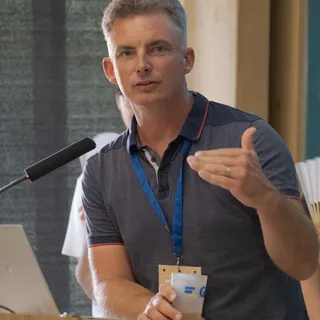
Yvan Le Bras
Muséum national d’Histoire naturelle (MNHN)
Technical support to the project.
-
Anne-Sophie Archambeau
Institut de recherche pour le développement (IRD)
Technical support to the project.